The fabric
Linen
The oldest bed fabric there is, and still the one that handles a warm night best.

Flax, from field to thread
Flax grows in damp, temperate coastal air, which is why the best of it comes from a narrow band running from Normandy to the Netherlands. The fibre is hollow, so it moves moisture instead of holding it. That single fact explains almost everything linen does in a bed.
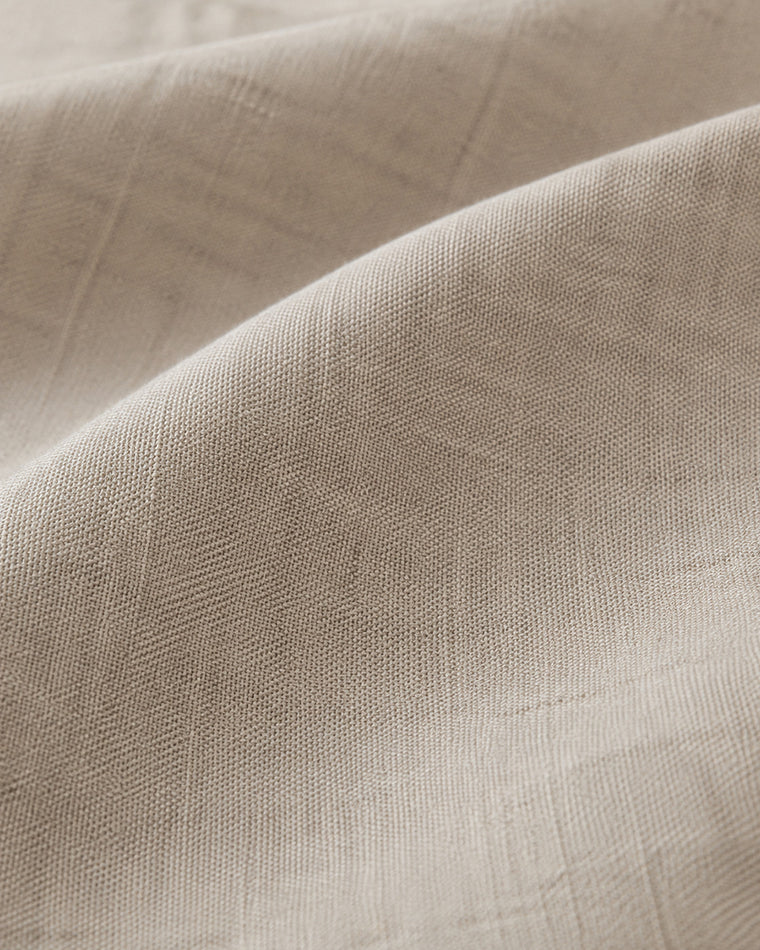
A loose weave, on purpose
Linen is woven open rather than tight. Air passes through it, which is what keeps the bed from getting that damp warmth at three in the morning. It also means linen creases, and no finish will stop that.

It gets better, slowly
Wash it warm the first time and it will soften more in that one cycle than in the following ten. It keeps softening for years. Skip the iron; linen is meant to look relaxed, and pressing it flat removes the reason to buy it.
Questions about this fabric
Will it be scratchy at first?
A little, if it has not been washed. Ours are stonewashed before cutting, so they arrive soft. Even so, the first wash at home makes a noticeable difference.
Is linen too cool for winter?
No. The hollow fibre works both ways: it carries heat away when you are warm and holds a layer of still air when you are not. It is the one fabric that genuinely works all year.
How do I stop it creasing?
You do not, and that is the point. Shake it out when you make the bed and the folds fall into place. If a smooth bed matters to you, percale is the better choice.


